

Guru Purnima
Vyasa Purnima
Kept on the day the tithi stands at sunrise; the observance runs through the day.
A day to honour spiritual teachers and mentors. Devotees pay respects to their gurus and remember Vyasa, the compiler of the Vedas.
Daily Panchang
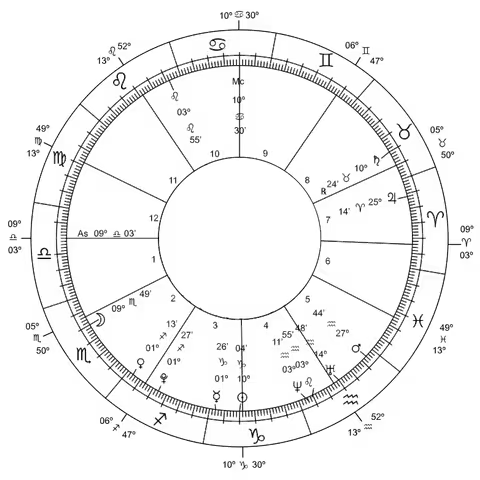
Sunday, Shukla Paksha. Guru Purnima falls on this day. The tithi is Purnima till afternoon, then Pratipada begins. The Moon is in Uttara Ashadha nakshatra till early morning the next day, then Shravana. Sarvartha Siddhi Yoga is formed on this day, an auspicious time for new work. Abhijit Muhurta (12:00 – 12:54) is good for new work; avoid Rahu Kaal (17:35 – 19:18). The Moon is in Dhanu rashi and the Sun in Karka.
Vyasa Purnima
Kept on the day the tithi stands at sunrise; the observance runs through the day.
A day to honour spiritual teachers and mentors. Devotees pay respects to their gurus and remember Vyasa, the compiler of the Vedas.
Adhika Ashadha
Sacred lunar leap month — a time for fasting, charity, and devotional practice.
Purnima
from Previous day 17:59 till 15:47
Krishna Pratipada
15:47 – Next day 13:12
Purnima — the full moon. A day for devotion, vrat and completing what was begun.
Sunday
Sunday — ruled by the Sun. A day of vitality and authority; good for leadership tasks and self-care.
Uttara Ashadha · Pada 1
from 01:48 till Next day 00:14
Fixed nakshatra — best for long-term commitments, foundations, and permanent purchases.
Vishkambha
from 00:07 till 21:11
Priti
21:11 – Next day 17:58
An inauspicious yoga — the Sun and Moon stand in a harsh relation. Traditionally avoided for major new ventures.
Bava
from 04:56 till 15:47
Balava
15:47 – Next day 02:31
A movable (chara) karana — one of the seven that repeat through the month. Fine for everyday work.
Panchang windows not defined here today
Choghadiya, Gowri and Rahu Kaal each divide local daylight into eight parts. At very high latitudes (above ~66°) the sun can stay up — or stay down — for the whole day, so a local sunrise/sunset pair doesn't exist for this date. Tithi, nakshatra and yoga above are still valid.
A timing system used mainly in Gujarat, Rajasthan and North India: eight day windows and eight night windows, each rated good, neutral, or bad. A quick way to pick (or avoid) a slot for an everyday task.
A South Indian tradition that splits the day and night into eight Gowri windows each — used for picking auspicious slots for everyday work.
A short-list of the seven most important windows — three auspicious (Brahma, Abhijit, Amrit) and four to avoid (Rahu Kaal, Yamaganda, Gulika, Varjyam). Some days may show fewer if a window isn't computed.
Each day and night splits into twelve planetary hours, each ruled by a planet. The ruling planet sets the hour's tone — pick an hour whose ruler suits the task.
Purnima · Sun
Jul 21
Daily Panchang
Daytime periods
8·1h 43m| 05:3607:19 | ||
| 07:1909:02 | ||
| 09:0210:44 | ||
| 10:4412:27 | ||
| 12:2714:10 | ||
| 14:1015:52 | ||
| 15:5217:35 | ||
| 17:3519:18 |
Night periods
8·1h 17m| 19:1820:35 | ||
| 20:3521:53 | ||
| 21:5323:10 | ||
| 23:1000:27 | ||
| 00:2701:45 | ||
| 01:4503:02 | ||
| 03:0204:19 | ||
| 04:1905:37 |
| 04:14–04:55 | ||
| 12:00–12:54 | ||
| 18:15–19:45 | ||
| 17:35–19:18 | ||
| 12:27–14:10 | ||
| 15:52–17:35 | ||
| 09:17–10:46 |
Daytime hours
12·1h 8m| 05:3606:45 | ||
| 06:4507:53 | ||
| 07:5309:02 | ||
| 09:0210:10 | ||
| 10:1011:19 | ||
| 11:1912:27 | ||
| 12:2713:35 | ||
| 13:3514:44 | ||
| 14:4415:52 | ||
| 15:5217:01 | ||
| 17:0118:09 | ||
| 18:0919:18 |
Night hours
12·52 min| 19:1820:09 | ||
| 20:0921:01 | ||
| 21:0121:53 | ||
| 21:5322:44 | ||
| 22:4423:36 | ||
| 23:3600:27 | ||
| 00:2701:19 | ||
| 01:1902:10 | ||
| 02:1003:02 | ||
| 03:0203:54 | ||
| 03:5404:45 | ||
| 04:4505:37 |
Calculated using Lahiri ayanamsa and the Drik Ganita (true-position) method.

Install the app for faster readings, saved chats and your daily panchang.

Scan this code to install the app on your phone.

We use cookies to understand how KundliGPT is used and to improve it. Privacy policy ·