
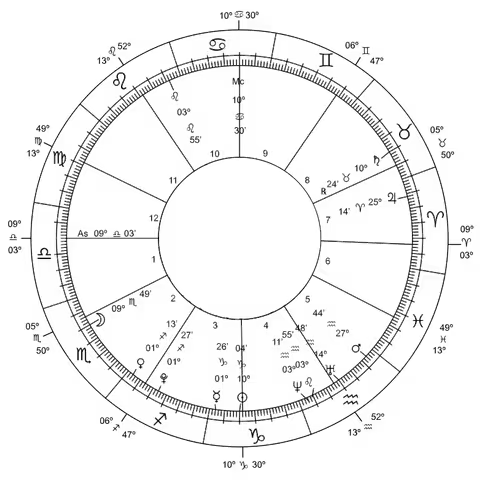
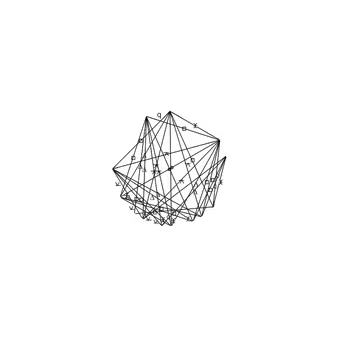
What is Vedic & Western Astrology?
Most astrology apps force you to pick a side — Vedic or Western. KundliGPT gives you both. The Vedic system (Jyotish) uses the sidereal zodiac, aligned with the actual star positions, and emphasizes dashas, nakshatras, and yogas for timing life events. The Western system uses the tropical zodiac, tied to seasons, and focuses on psychological traits, aspects, and transits. Both systems have deep wisdom, and they often complement each other. KundliGPT calculates your chart in both systems from the same birth data. Toggle between Vedic and Western views to see how your planetary positions shift. The AI can explain what your chart means in either tradition, or compare the two. Whether you grew up with Jyotish or discovered astrology through Western horoscopes, you get the full picture here.
Key Highlights
Sidereal & Tropical
Full chart calculation in both zodiac systems. See how your signs shift between Vedic and Western.
Vedic Dashas & Yogas
Vimshottari Dasha system, planetary yogas, and nakshatra analysis — the core of Jyotish.
Western Aspects
Conjunctions, oppositions, trines, squares, and sextiles with orb calculations.
Side-by-Side Comparison
See your Vedic and Western charts together and understand where they agree and differ.
AI Explains Both
Ask the AI about your chart in either system. It cites the right tradition's rules for each answer.
Educational Content
Learn about both systems with our comprehensive guides on zodiac signs, planets, houses, and aspects.
Benefits
- ✓ No need for separate apps — get both Vedic and Western readings in one place
- ✓ Compare how the two systems interpret the same birth chart differently
- ✓ Use Vedic dashas for timing and Western aspects for psychological insights
- ✓ Comprehensive educational content for learning both traditions
- ✓ AI understands both systems and applies the correct rules for each
Common Use Cases
Comparing your Vedic Moon sign with your Western Sun sign
Understanding why your Vedic and Western zodiac signs differ
Using Vedic Dasha system alongside Western transit analysis
Learning astrology by studying both traditions on the same chart
Showing a Western astrology enthusiast their Vedic chart perspective
Frequently Asked Questions
Why are my Vedic and Western signs different? +
Vedic astrology uses the sidereal zodiac (based on actual star positions), while Western uses the tropical zodiac (based on seasons). There's roughly a 23-degree difference (called ayanamsha) between them, which typically shifts your sign back by one position in the Vedic system.
Which system is more accurate? +
Both systems have millennia of tradition and millions of practitioners. Vedic astrology excels at timing predictions through the Dasha system. Western astrology excels at psychological profiling through aspect analysis. Many serious astrologers study both. Neither is inherently 'more accurate' — they measure different things.
Can the AI use both systems in one conversation? +
Yes. You can ask 'What does my Vedic chart say about career?' and then 'What does my Western chart say?' in the same conversation. The AI keeps the context and applies the correct system's rules for each question.
Do reports cover both systems? +
The premium reports (Dasha, Love, Saturn, etc.) are primarily Vedic-focused since they use Jyotish-specific concepts like Mahadasha and Guna matching. The birth chart feature supports both systems fully.
Try KundliGPT for Free
Unlock this report and 5 more with KundliGPT Pro. Plus unlimited AI chat, saved conversations, and complete chart features.