
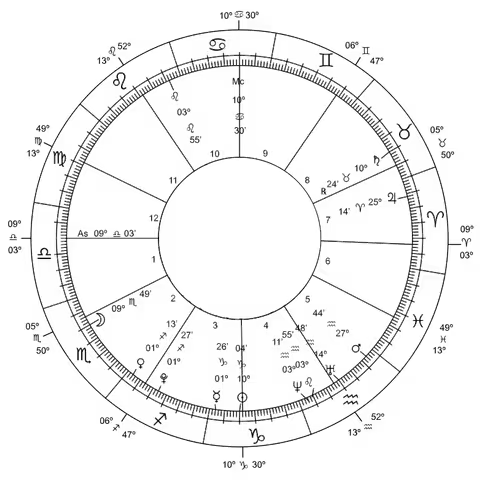

12 Houses (Bhavas) in Vedic Astrology
In Vedic astrology, the birth chart is divided into 12 houses or Bhavas, each governing a specific domain of life. From your personality and wealth to career and spiritual liberation, these houses form the blueprint of your existence. Understanding your houses reveals how planetary energies manifest in your daily experience.
First House
Tanu Bhava
What is the 1st house in Vedic astrology? Called Tanu Bhava, the first house in a birth chart defines your physical body, personality, and how you move through the world. The ascendant (Lagna) sits here and shapes the entire horoscope. A strong 1st house gives solid health, natural confidence, and a personality that people notice. When astrologers look at a chart, they read the Tanu Bhava first because it colours every other placement.
Second House
Dhana Bhava
What does Dhana Bhava mean? The 2nd house in Vedic astrology deals with accumulated wealth, family ties, speech, and eating habits. It is also a maraka (death-inflicting) house, so its role in financial stability and health timing is significant. Planets in the 2nd house reveal how someone talks, what their voice sounds like, and how close they are to immediate family.
Third House
Sahaja Bhava
What is the 3rd house in Vedic astrology? Sahaja Bhava covers courage, younger siblings, communication skills, and short-distance travel. Because it is an upachaya (growing) house, its effects get stronger with age. The 3rd house in a birth chart tells you about a person's willpower, artistic leanings, and how they get along with siblings and neighbours.
Fourth House
Sukha Bhava
What does Sukha Bhava mean in a birth chart? Literally "house of happiness," the 4th house in Vedic astrology covers the mother, home life, land, vehicles, formal education, and emotional well-being. It sits at the bottom of the chart, pointing to your roots and psychological foundation. A strong 4th house means the person has a stable emotional base to build everything else on.
Fifth House
Putra Bhava
What is the 5th house in Vedic astrology? Putra Bhava is a trikona (trine) house tied to children, creative intelligence, romance, past-life merit, and speculative gains. The 5th house in a birth chart shows innate talent, the capacity for joy, and the fruits of good karma carried forward from earlier lives. Its strength or weakness shapes everything from fertility to artistic expression.
Sixth House
Ari Bhava
What is the 6th house in Vedic astrology? Ari Bhava (house of enemies) is a dusthana (difficult) house and an upachaya (growing) house at the same time. It deals with enemies, disease, debt, and obstacles, but it also measures your ability to fight through them. The 6th house in a birth chart shows how someone handles competition, daily work, and life's routine pressures.
Seventh House
Yuvati Bhava
What is the 7th house in Vedic astrology? Yuvati Bhava is a kendra (angular) house sitting directly across from the ascendant. It covers marriage, your life partner, business partnerships, and all one-on-one relationships. The 7th house in a birth chart tells you about the nature of your spouse, the quality of married life, and how partnerships and foreign travel will unfold.
Eighth House
Randhra Bhava
What does Randhra Bhava mean? The 8th house in Vedic astrology deals with longevity, sudden change, occult knowledge, inheritance, and everything hidden beneath the surface. As a dusthana house, it can deliver sharp upheavals. But it also opens doors to deep spiritual transformation, strong research skills, and access to other people's wealth. Planets in the 8th house often work in unpredictable ways.
Ninth House
Dharma Bhava
What is the 9th house in Vedic astrology? Dharma Bhava is the strongest trikona (trine) house and the house of fortune. It covers dharma (one's righteous path), the father, the guru, higher education, philosophy, and long-distance travel. Also called Bhagya Sthana (house of luck), a strong 9th house in a birth chart can lift the entire horoscope. Its condition often separates a good chart from a great one.
Tenth House
Karma Bhava
What does the 10th house mean in Vedic astrology? Karma Bhava sits at the highest point of the chart and maps to career, public reputation, social standing, and the actions you put into the world. As a kendra house it carries real weight. The Midheaven (MC) falls here, tying it directly to professional success. The 10th house in a birth chart tells you what kind of work suits you and how the public will perceive you.
Eleventh House
Labha Bhava
What is the 11th house in Vedic astrology? Labha Bhava (house of gains) is the strongest upachaya house and covers all forms of income, wish fulfilment, and social connections. The 11th house in a birth chart shows the payoff of your efforts: friendships, elder siblings, and whether your goals actually materialise. Nearly every planet does reasonably well here.
Twelfth House
Vyaya Bhava
What is the 12th house in Vedic astrology? Vyaya Bhava (house of expenditure) is the final house of the zodiac. It covers endings, losses, foreign lands, the subconscious, and spiritual liberation. While it is a dusthana house linked to expenses and isolation, it is also the moksha house, pointing to the path toward spiritual freedom. The 12th house in a birth chart tells you where energy drains out and where spiritual growth comes in.
Understanding the House System in Vedic Astrology
The twelve houses in Vedic astrology (Jyotish) represent the complete cycle of human experience. Each house is connected to specific life themes, body parts, and relationships. When planets occupy or aspect these houses, they activate and influence the corresponding areas of life.
Houses are classified into several groups: Kendra houses (1, 4, 7, 10) provide stability and strength; Trikona houses (1, 5, 9) bring fortune and dharma; Upachaya houses (3, 6, 10, 11) improve over time; and Dusthana houses (6, 8, 12) present challenges that lead to growth.
The lord of each house (the planet ruling the sign on the cusp) carries the themes of that house wherever it is placed. For example, the 10th house lord placed in the 9th house connects career with fortune, higher learning, or the father. Understanding these connections is key to reading a Vedic birth chart accurately.
Explore Planetary Influences
Planets are the active forces that bring house significations to life. Learn about the 9 planets (Navagraha) and how they interact with the houses in your birth chart. You can also explore the 12 zodiac signs (Rashis) for a complete understanding of Vedic astrology.
Western Astrology Houses
Western astrology uses the same 12 houses but typically with the Placidus house system rather than whole-sign houses. The meanings are similar but Western interpretations emphasize psychological growth and self-awareness. Explore Western astrology for a complete comparison.
Discover Your House Placements
Want to know which planets occupy your houses and what that means for you? Chat with our AI Vedic astrologer for a personalized reading.
Analyze Your Birth Chart