
9 Planets (Navagraha) in Vedic Astrology
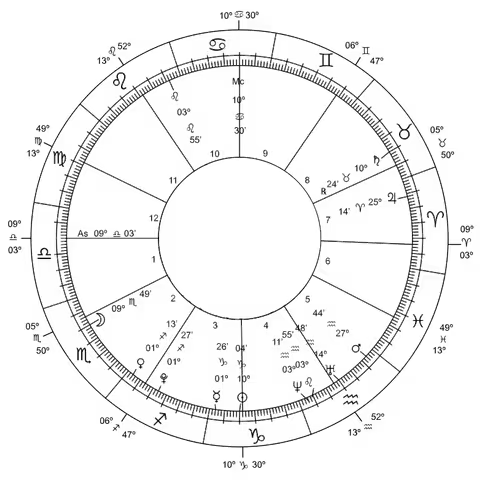
The Navagrahas are the nine celestial bodies that form the foundation of Vedic astrology. Each graha carries distinct energies that influence personality, karma, health, and destiny. From the radiant Sun representing the soul to the mystical Ketu guiding spiritual liberation, these nine planets shape every aspect of human life.
Sun
Surya (Surya)
Sun, called Surya (सूर्य) in Vedic astrology, is the king of the nine grahas and the indicator of your soul (Atma). It shapes your sense of authority, willpower, and relationship with your father. A strong Sun in a birth chart gives leadership ability, government connections, and solid self-confidence. A weak Sun often shows up as low self-esteem, poor eyesight, or chronic fatigue. If you are running a Sun dasha or have Sun in a kendra house, its effects on career and health become especially noticeable.
Moon
Chandra (Chandra)
Moon, called Chandra (चंद्र) in Vedic astrology, is the planet of mind, emotions, and your mother. It moves through the zodiac faster than any other graha, spending roughly 2.5 days in each sign. Your Moon sign (Rashi) is determined by the Moon's placement at birth, and many Vedic astrologers consider it as telling as your ascendant. A strong Moon in a horoscope gives emotional balance, good intuition, and a calm temperament. A weak or afflicted Moon can trigger anxiety, mood instability, and trouble sleeping.
Mars
Mangal (Mangal)
Mars, called Mangal (मंगल) or Kuja in Vedic astrology, is the warrior planet. It controls your physical energy, courage, and ability to take action. Mars is the karaka of younger siblings, property, and land. If you have Mangal Dosha in your birth chart (Mars in the 1st, 4th, 7th, 8th, or 12th house), it plays a significant role in marriage compatibility analysis. A strong Mars in a horoscope makes you decisive, physically fit, and fiercely independent. A weak Mars can bring blood-related health issues, property disputes, and a lack of drive.
Mercury
Budha (Budh)
Mercury, called Budha (बुध) in Vedic astrology, is the prince among the nine grahas. It controls your intellect, communication skills, and ability to process information. Mercury is a dual-natured planet, meaning it takes on the character of whichever planet it sits closest to in your birth chart. A strong Mercury in a horoscope makes you sharp-witted, articulate, and good with numbers or words. Weak Mercury effects include speech difficulties, poor memory, skin problems, and trouble in business dealings. Mercury also has a special connection to your maternal uncle in the chart.
Jupiter
Brihaspati (Guru)
Jupiter, called Brihaspati or Guru (गुरु) in Vedic astrology, is the strongest natural benefic and the teacher of the gods (Devaguru). It controls wisdom, fortune, children, and your moral compass. Jupiter's placement in a birth chart is a primary marker for overall luck in life. During a Jupiter dasha or when Jupiter transits a favourable house, you are likely to experience growth in wealth, education, or spiritual understanding. A weak Jupiter in a horoscope can lead to financial instability, difficulty having children, liver problems, and a lack of direction in life. In a woman's chart, Jupiter also indicates the nature of the husband.
Venus
Shukra (Shukra)
Venus, called Shukra (शुक्र) in Vedic astrology, is the teacher of the Asuras and the planet of love, beauty, and material comfort. It controls romance, marriage, luxury, vehicles, and artistic talent. In a man's birth chart, Venus is the karaka (significator) of the wife. A strong Venus in a horoscope brings marital happiness, financial comfort, and a refined aesthetic sense. Weak Venus effects include troubled relationships, kidney issues, lack of charm, and dissatisfaction with material life. Venus also has a direct connection to your relationship with money and how you experience pleasure.
Saturn
Shani (Shani)
Saturn, called Shani (शनि) in Vedic astrology, is the slowest-moving visible planet and the strict teacher of the zodiac. It controls discipline, karma, longevity, and the consequences of your past actions. Saturn's transits are among the most watched in Jyotish, especially Sade Sati (the 7.5-year period when Saturn transits over your Moon sign) and Dhaiyya. Many people fear Saturn, but this planet rewards patience, honest effort, and righteous living. A strong Saturn in a horoscope gives endurance, a practical mind, and success that comes through sustained hard work. Weak Saturn effects include chronic joint pain, depression, career setbacks, and repeated delays in life milestones.
Rahu
Rahu (Rahu)
Rahu (राहु) is the north lunar node, a shadow planet (Chaya Graha) in Vedic astrology with no physical body. Despite being invisible, Rahu's effects in a birth chart are intense and often unpredictable. It amplifies whatever house and sign it occupies, pushing you toward worldly ambition, foreign connections, and unconventional life paths. Rahu in your horoscope can bring a sudden rise in social status, breakthroughs in technology, or opportunities abroad. But it can also create confusion, obsessive thinking, and a pull toward addictive behaviours. Rahu's dasha period (18 years) is often a transformative stretch where life changes direction sharply.
Ketu
Ketu (Ketu)
Ketu (केतु) is the south lunar node, the other shadow planet in Vedic astrology. Where Rahu pulls you toward the material world, Ketu draws you inward toward detachment, past-life karma, and spiritual liberation (moksha). Ketu in your birth chart shows areas where you carry deep, almost instinctive knowledge from previous lives. A well-placed Ketu gives psychic sensitivity, healing ability, and sharp investigative skills. Weak Ketu effects include sudden unexplained losses, identity confusion, and a persistent feeling of disconnection from everyday life. Ketu's dasha period (7 years) often triggers a spiritual awakening or a major stripping away of attachments.
What Are the Navagrahas?
The term "Navagraha" comes from Sanskrit: "Nava" meaning nine and "Graha" meaning that which grasps or influences. In Vedic astrology (Jyotish Shastra), these nine celestial bodies are not merely astronomical objects but cosmic forces that govern different aspects of human destiny and karmic patterns.
The seven visible grahas are the Sun (Surya), Moon (Chandra), Mars (Mangal), Mercury (Budha), Jupiter (Brihaspati), Venus (Shukra), and Saturn (Shani). The two shadow planets, Rahu (north lunar node) and Ketu (south lunar node), complete the nine. Each planet rules specific zodiac signs, has natural friendships and enmities with other planets, and produces distinct results depending on its placement in the birth chart.
Planets are classified as natural benefics (Jupiter, Venus, waxing Moon, well-associated Mercury) and natural malefics (Sun, Mars, Saturn, Rahu, Ketu, waning Moon). However, their functional nature changes based on the ascendant, meaning a natural malefic can produce excellent results when it rules auspicious houses.
Explore Houses and Signs
Planets operate within the framework of 12 houses (Bhavas) and 12 zodiac signs (Rashis). The combination of planet, house, and sign creates the unique story of your birth chart.
Western Astrology Planets
In Western astrology, the same classical planets are used alongside the outer planets — Uranus, Neptune, and Pluto. Western astrology uses the tropical zodiac and focuses on psychological archetypes rather than Vedic significations. Explore the full Western astrology section to learn more.
Discover Your Planetary Placements
Curious which planets are strong or weak in your birth chart? Our AI Vedic astrologer can analyze your Navagraha placements and reveal their impact on your life.
Analyze Your Birth Chart